AI-Powered Chatbot for Intelligent Customer Support

AI-Powered Chatbot for Intelligent Customer Support

Download PDF

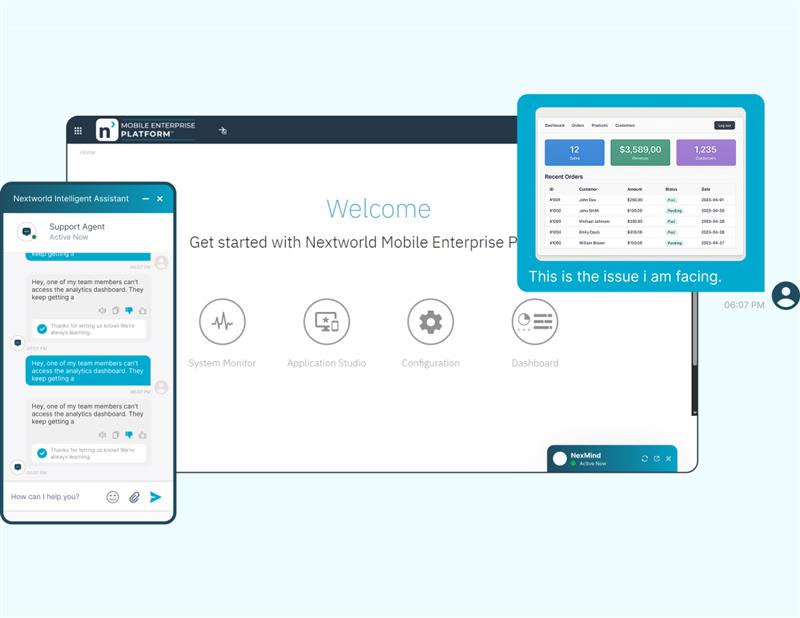
An AI-driven intelligent assistant built for enterprise SaaS and CX platforms, designed totransform customer support into a seamless, proactive, and always-available experience. Bycombining natural language understanding with deep system integrations, the solutionempowers users to resolve queries, access documentation, and raise support ticketseffortlessly, all through a single conversational interface.

Its vision is to eliminate the friction of navigating complex help portals while enablingenterprises to deliver faster, smarter, and more cost-efficient support.

Challenges

Enterprise SaaS customers in industries like CRM, DevOps, and license management oftenstruggle with traditional support systems. Users face:

  • Difficulty navigating vast documentation and help portals .
  • Low adoption of self-service due to unintuitive UI and scattered resources.
  • High reliance on human agents for repetitive, low-value queries.
  • Lack of contextual support, slowing ticket resolution.
  • Inefficient, multi-step workflows for raising support requests or accessing integratedsystems.

These issues created longer resolution times, higher support costs, and lower customersatisfaction. Enterprises required a solution that could unify fragmented support experienceswhile scaling across on-premise and cloud environments securely

Solutions

A next-generation, agentic AI-powered support assistant was designed and implemented toblend natural language intelligence with proactive workflows.

Key solution components included:

  • Conversational AI: Integration of OpenAI’s GPT-3.5 Turbo, trained on enterprisedocumentation and FAQs, enabling contextual, real-time query resolution.
  • Agentic Intelligence: Autonomous flows for raising tickets, attaching optional screenrecordings, and integrating seamlessly with CRMs like Salesforce.
  • Custom Dashboards: Proactive monitoring and ticket management interfaces tailored touser roles (ops, composers, end users).
  • Scalable Architecture: Built on .NET backend, Python AI components, and Milvus DB forvector retrieval. Deployed with Docker containers on AWS for high availability and lowlatency.
  • Secure Integrations: REST/GraphQL APIs with JWE token-based authentication ensuredenterprise grade role-based access control.
  • Feedback Loop: Real time feedback collection on bot responses, continuously improvingaccuracy and user trust.

The incremental, feedback-driven implementation ensured smooth adoption, even inenvironments with legacy systems and on-premise restrictions.

Results

  • Efficiency Gains: Reduced query resolution time fromminutes of manual searching to instantresponses. Agent management time cutby 85%. Widget load times optimizedfrom 4–5s to 2–3s.
  • User Engagement: Boosted self-service adoption, resultingin a 60% drop in support requests relatedto navigation issues. Contextual ticketcreation (with optional screenrecordings) reduced back-and-forthclarification with support staff.
  • Cost Savings: Infrastructure and AI costs remainedminimal (~$6–8 per 10,000 interactions,~$46/month infra), while deliveringmeasurable ROI through reduced ticketvolumes and higher agent productivity.
  • Customer Satisfaction: Enabled faster resolutions, proactivesupport flows, and higher adoption ratesamong support and operations teams

Technology Stack

Key Takeaway

This AI-powered support assistant demonstrates how Agentic AI can transform reactive helpdesks into proactive, intelligent, and scalable ecosystems. By bridging fragmentedknowledge systems with conversational intelligence, it empowers enterprises to cut costs,speed up resolutions, and deliver the always-on, frictionless experiences that moderncustomers expect.