
Transforming Art Education: Seamless Integration of Design Tools within a Custom LMS

Transforming Art Education: Seamless Integration of Design Tools within a Custom LMS

Download PDF

In today's evolving art world, traditionalartistic skills must be combined withproficiency in complex design tools. This casestudy explores how Invimatic collaboratedwith a leading North American art college tobridge this gap.

Company Overview

The College is a prestigious North American art institution dedicated to fosteringthe next generation of creative talent. Their curriculum emphasizes traditional artforms, but they sought to expand their offerings to include the specialized toolsused by professional artists.

Challenges

  • Limited Exposure to Complex Tools: Theexisting curriculum focused on traditional arttechniques, leaving a gap in exposure toprofessional design software and workflows
  • Inadequate Learning Resources: Basiclearning materials were available within theLMS, but they lacked the depth andinteractivity needed for mastering thesetools
  • Inflexible Learning Platform: The existingLMS platform lacked the capabilities tointegrate advanced design tools and supportthe specific needs of art education.

Solution Offered

Invimatic developed a custom Learning Management System (LMS) withLearning Tool Interoperability (LTI) capabilities. This solution addressed thelimitations of the existing platform and offered several key advantages.

  • LTI-Integrated Design Component: Invimatic developed an LTI component that seamlessly integratedwith The College's existing LMS. This custom component offered adedicated drawing and design workspace within the familiar LMSenvironment.
  • Freehand Drawing Functionality: Students gained the ability to practice freehand drawing directlywithin the LMS, fostering a more natural and intuitive learningexperience
  • Enhanced Learning Resources: The custom LMS facilitated the integration of rich learning materialsspecifically focused on mastering complex design tools, includingtutorials, demonstrations, and sample projects.

Technology Implementation

The custom LMS utilized Learning Tool Interoperability (LTI) to seamlesslyconnect with the newly developed design component. This ensured securetwo way communication between the two systems, allowing data exchangelike user information, course context, and potentially even student workcreated within the design tool.

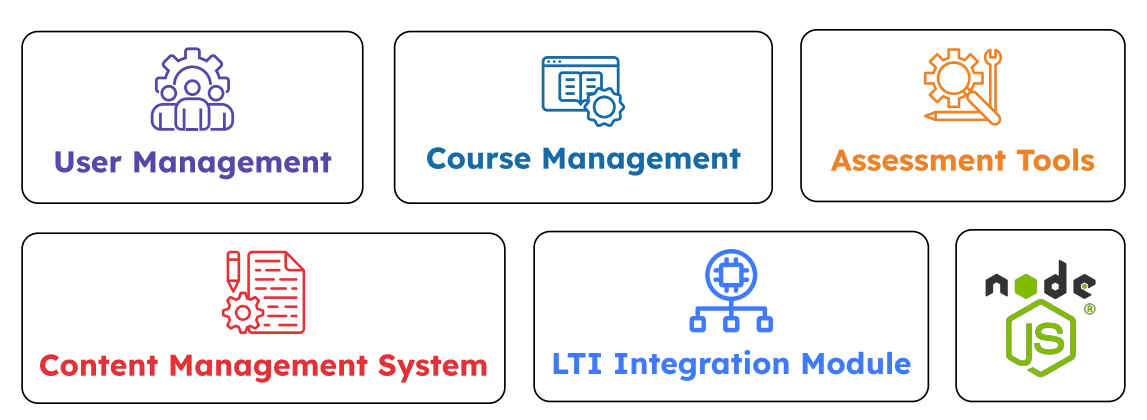
LTI Integration Module: A crucial module within the LMS facilitatedthis communication with the design component. This module handledfunctionalities like:

  • Launch Request Processing: Parsing incoming requests from the designcomponent to understand the user, course context, and desired action
  • User and Course Validation: Verifying user identity and courseenrollment within the LMS to ensure authorized access to the design tool
  • Deep Linking: Generating secure links within the LMS that direct users tothe appropriate functionality within the design component based on therequest.

This LTI integration ensured a smooth user experience for students,allowing them to access the design tools directly from within the familiarLMS environment.
Technical Stack

Results

The College has observed significant improvements in its arteducation program:

  • Increased Student Satisfaction: Students benefitfrom a broader and more industry relevantlearning experience, preparing them for success inthe professional art world
  • Enhanced Faculty Flexibility: Educators can nowintegrate advanced design instruction into theircurriculum, enriching the overall learningexperience
  • Improved Institutional Reputation: The Collegehas established itself as a leader in innovativeeducational technology, attracting studentsseeking industry focused art education.

Conclusion

This case study demonstrates the power of LTI in revolutionizing educationaltechnology. By enabling seamless integration of external learning platforms within acentralized LMS, LTI empowers education institutions to bridge the gap betweentraditional education and industry demands, preparing students for success in theever-evolving creative landscape