

.webp)
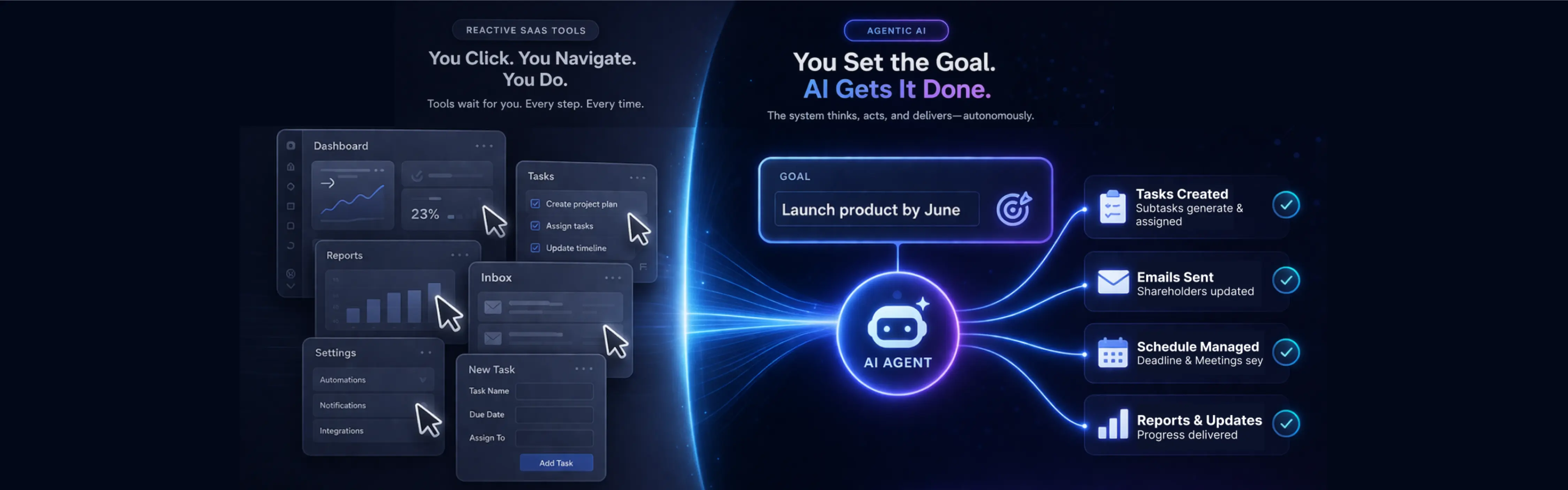
If you've ever typed a business question into ChatGPT and gotten a confident, well-written answer that was completely wrong for your company, welcome to the club. The question isn't whether agentic AI is useful. It clearly is. The question is: which kind of AI actually works for your enterprise?
TL;DR:
There are two broad paths an enterprise can take with AI:
- Use a public large language model (LLM) like ChatGPT, Claude, or Gemini, it is powerful, general-purpose, ready to go out of the box.
- Build and train a private small language model (SLM) on your own company data, this one is smaller, focused, and built specifically for your domain.
Neither between LLMs vs. SLMs is the universal winner. But one of them is almost certainly better for you, and the wrong choice costs money, time, and sometimes a data breach headline you really don't want.
Let's break it down now.
What's the Difference Between LLMs and SLMs?
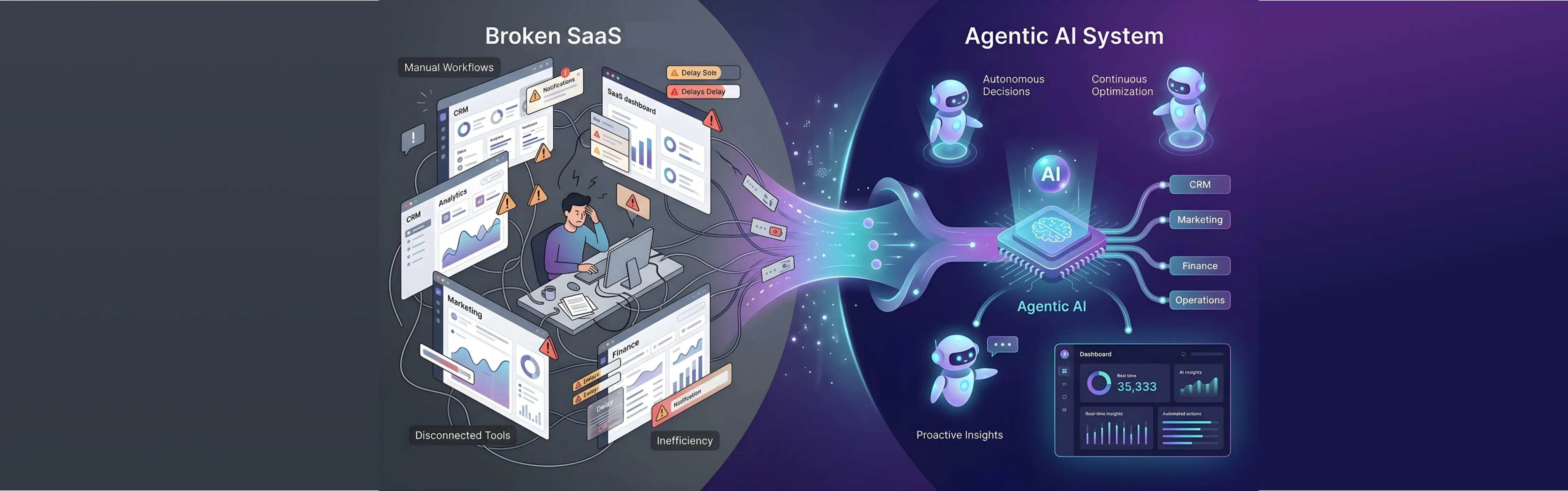
Think of a public large language model (LLM) like ChatGPT as a brilliant generalist. It has read most of the internet. It can write emails, explain quantum physics, debug code, and translate Spanish, all before lunch. But it doesn't know your internal SOPs, your product catalogue, your compliance rules, or how your company defines a closed deal.
A small language model (SLM) trained on your data is more like a highly experienced specialist. It hasn't read the internet, but it has studied every document, policy, support ticket, and report your company has ever produced. It doesn't get distracted by irrelevant knowledge, it just knows your world, deeply.
Side-by-Side Comparison
When a Public LLM Is Perfectly Fine
Not every company needs a custom model. Be honest with yourself here.
Public LLMs work well when:
- You're using AI for general tasks like summarising public news, drafting marketing copy, writing internal memos.
- Your data isn't sensitive. If you're not handling patient records, financial data, legal documents, or proprietary IP, then the risk profile changes significantly.
- You're a small team experimenting with AI before committing a budget to it.
- The task doesn't require institutional memory. Asking ChatGPT to explain GDPR? Great. Asking it to apply GDPR rules to your specific contracts is where it starts guessing.
In short: if your use case is general, and privacy isn't a concern, public LLMs give you a lot of value for very little cost. There's no shame in starting there.
When You Need a Private Small Language Model
Here's where it gets serious. According to a report by Arelion, over 70% of enterprise leaders cite data privacy as their primary barrier to AI adoption. That's not paranoia, but a legal liability speaking.
You need a private SLM when:
- You operate in a regulated industry. Healthcare, banking, insurance, legal or if your data is subject to HIPAA, GDPR, PCI-DSS, or sector-specific regulations, sending it to a third-party AI isn't just risky, it may be non-compliant.
- Your competitive edge lives in your data. Your pricing models, customer behaviour patterns, internal research, this is your moat. Feeding it to a public model means it could inform responses to your competitors. That's a risk most enterprises quietly accept without realising it.
- Generic answers aren't good enough. A public LLM trained on the internet doesn't know that "Project Falcon" means something specific in your company, or that your refund policy changed in Q2. A model trained on your data does.
- You need reliable, auditable outputs. In regulated environments, "the AI said so" isn't a defence. A private model can be tested, monitored, and audited in ways a third-party black box cannot.
- You're scaling AI across the organisation. At a certain volume of API calls, public LLM costs compound fast. A private model, once built, can be significantly more cost-efficient at scale.
"Small" Doesn't Mean Weak
There's a common misconception worth addressing directly: people assume bigger models are always better. That's not true in enterprise contexts. A large language model is trained to be good at everything.
A small language model is trained to be excellent at your thing. In a controlled enterprise environment, a well-trained SLM with 7 billion parameters can outperform a 70-billion parameter general model on domain-specific tasks, simply because it's not carrying around knowledge it doesn't need.
Think of it this way: you wouldn't hire a neurosurgeon to run your supply chain, no matter how smart they are. Specialization matters.
We have created a playbook that will help you make an informed decision.

What Invimatic's Build-Train-Deploy Maintain Model Looks Like
Building a private SLM sounds daunting. It doesn't have to be, if you have the right partner.
Invimatic's approach breaks it into four clear phases:
- Build: Before any model is trained, the focus is on understanding your data landscape. What do you have? Where does it live? Is it clean enough to train on? Most enterprises are sitting on valuable unstructured data like documents, emails, support tickets, manuals, that has never been put to work. This phase structures that data and defines the model's purpose.
- Train: The model is trained exclusively on your data, in your environment. No data leaves your infrastructure. The model learns your terminology, your workflows, your context, not the internet's.
- Deploy: The trained model is integrated into your existing tools and workflows. This isn't a standalone chatbot bolted onto your website. It's an AI layer that works inside the systems your team already uses.
- Maintain: AI models drift. Your business changes, your data changes, regulations change. Invimatic's maintenance model ensures the SLM stays accurate and compliant over time, with regular retraining, monitoring, and updates. This is the part most vendors skip. It's also the part that determines whether your AI investment holds its value.
The Bottom Line
LLMs are remarkable for general tasks, brainstorming, and low stakes use cases, it's genuinely hard to beat. But "remarkable" and "right for your enterprise" are two different things.
If your business runs on proprietary data, operates in a regulated environment, or simply needs AI that understands your context, a small language model trained on your data isn't a luxury. It's the only version of AI that actually does what enterprise AI is supposed to do.
The question isn't whether your enterprise should use AI. You already know the answer to that. The question is whether you want AI that knows your business, or AI that knows everything except your business.
Want to see what a domain-specific AI could look like for your organisation?



.svg)


.svg)
.avif)
Leave a Comment
Your email address will not be published. Required fields are marked *